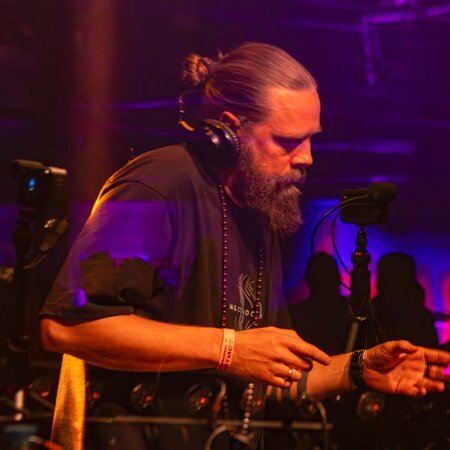
It took me a while to meet this person. To put it plainly, he seemed to be deliberately avoiding meeting me: his phone was constantly switched off or unanswered, and over the Internet he offered brief promises like “let’s talk tomorrow” or some unconventional excuse made bearable at least by its good sense of humour. It gave the impression that he was either insanely busy or, conversely, tired of life (or of communication?) and hiding from looming problems and unwanted acquaintances.
But my persistence and relentless attacks over several weeks finally won out.
We met in a cosy little café on Nevsky late in the evening. He smiled sweetly; his dark-brown eyes quickly slid over me, apparently automatically assessing my physical appearance.
Hi, Katya.
Hi. So our meeting has finally happened!
He looked at me with a gaze that had, you know, a sly little squint to it—one where you can’t tell whether the person is laughing at you or has some joke in mind—and immediately went on the attack.
You know that the interview you’re about to conduct will appear in a magazine of which I am a co-founder?
I know.
And do you think it’s normal for me to write about myself in my own magazine?
What worries you about it?
People might form the wrong opinion of me—as someone who’s become full of himself, self-promotes and praises himself in every possible way.
What makes you think this interview will be full of praise? Or do you have a complex about being someone who doesn’t like it “when people say bad things about him”? Sorry, I can’t remember the psychological term.
Zhenya smiled, seemingly with satisfaction. I’d stake my head on it: he was pleased that I didn’t give in to his pressure, and answered just as boldly and on equal terms. He leaned back more comfortably in his chair and lit a cigarette.
Okay, fire away with the questions.
I didn’t really prepare any. Let’s just chat: you tell me about yourself, and I’ll help with leading prompts?— I winked.
Deal.
He blew a ring of smoke towards the window.
I know the feeling. Were you born in Leningrad?
No. I was born near Minsk, in the small Belarusian military town of Slutsk.
The “military dad, teacher mum” formula?
Exactly. A primary-school teacher. My mum is the most wonderful person in the world.
It would be logical to assume that you did well at school?
Logical. Unfortunately, because I changed schools frequently when the military unit was relocated, I didn’t manage to graduate with a gold medal. One “four” got in the way.
That’s a shame. Why did you come to Saint Petersburg, and when?
In ’95. I enrolled at the Mozhaysky Military Engineering and Space University.
Spell it out?
The Military Engineering and Space University. While I have the chance, I’d like to say hello to all the guys who stomped around the Lekhtusinsky parade ground.
Wow… you’re a military man too?
Something like that.
And how did that happen—you wanted to become a military man, but ended up a musician and a DJ?
A person’s fate is often a pretty strange thing. As a child I wanted to become an astronaut, a paratrooper and a programmer.
Okay, what crooked little path of fate led you into the club scene? What made you play music for people?
You know, when I was ten I would put a tape recorder in the window, play the cassette I liked most at the time, and watch my friends below, looking for emotions on their faces that showed they liked the music. And when I found those, I felt enormous satisfaction. But that wasn’t enough. In ninth grade I got a job as the school disc jockey. I had a huge collection of audio cassettes. At the time, the most fashionable style was techno à la 2 Unlimited, Dr. Alban, Snap, Ice Mc, Technotronic and so on.
I finished eleventh grade in the military town of Ozerny, near Bologoye. Being close to the capitals made getting new music more accessible too. I got into Prodigy, Scooter, Dune, Mark`Oh and all the other stuff that, before we really knew what it was, everyone called rave and acid, while drawing smiley faces on the walls.
What year was that?
’94. And in ’95 I came to Saint Petersburg to enrol. I was blown away by what was happening here. I devoured every issue of Ptvuch, collected flyers for parties, listened to Port FM, secretly hiding my player after lights-out. I bought hardcore cassettes; at the time I was heavily into the Thunderdom and Rave Montage compilations. At weekends, when I managed to beg my way out on leave, I’d put on a bright orange T-shirt, baggy trousers and thick-soled trainers and go clubbing on the cadet’s salary I had painstakingly saved. Pretty quickly I became the DJ at the Mozhaysky club too, where I ran discos for cadets and the girls who came there.
Do discos like that still exist?
I don’t know about now; I think so. The academy club holds events like that at weekends, and only cadets in uniform and girls are allowed in. You know, there were always at least 300 people on the dancefloor.
Wow! It must look funny. Boys in uniform and girls who are into them.
Yes, it looks extravagant. It was in that club that I learned the first basics of mixing. I brought the speed resistors of the motors in two Mayak tape recorders out onto the top panels, and by slowing the cassette down or nudging it forward with my finger, I aligned these homemade pitches and mixed fairly decently on ordinary cassettes. The mixer was an Elektronika PM01—a Soviet classic.
When did you discover drum and bass music?
There were programmes on Port FM where people played old jungle and drum and bass, but for some reason I didn’t get into it at first. I listened to hardcore and gabber. The first time I really got hooked was when I heard Syndicate. It was Boomer and Tuk’s programme on Record, brilliantly produced with jingles, film excerpts and their jokes. They played the first releases from Ram Records, Joker`a, Moving Shadow and Renegade Hardware. This music was much more vivid and defined than the old blurry jungle and the plain-as-three-kopecks jump-up. It was more aggressive and technically better produced. I was instantly addicted. I taped every broadcast. I used to go AWOL at night to Vostochnye Udary and Mama, and got put in the guardhouse for it.
You’re kidding!
Yes, it’s actually nearby, on Sadovaya. Anyway. At the same time I bought two Vega 122 turntables and installed them at the Mozhaysky club. A girl I knew brought me my first records from England, and while sneaking away from self-study I learned to mix vinyl, felt like a hero and made plans to tear up the country’s dancefloors. This was already my fourth year; we had been moved from the barracks into a dorm, where at night I learned the basics of music-making with Fast Tracker 2 on a friend’s computer.
How did you manage to do it all?
I told you—I was obsessed. I was burning with an intense desire to be as cool as those guys behind the decks at the head of the dancefloor, who could change the emotions of hundreds of people with a single wave of the hand. I “prayed” to Boomer and held him up as my example.
As far as I know, you’re on bad terms with him now?
We simply have no relationship. We’re involved in different things. It’s a nasty subject; I’m really fed up with the filthy rumours about promoter groups arguing, who did what nasty thing to whom, who’s cool and who’s shit. Can we leave it alone?
No problem. But at this point readers might think you were simply afraid to tell the story or left something out.
No. I have nothing to be afraid of, and nothing to conceal either. Anyone interested in the facts on this subject can dig up the forums on the Internet, where people have already spat all over each other, endlessly arguing about who was right and who was wrong.
Okay, let’s get back to our subject.
Yes, let’s. Anyway, by the end of my fifth year, after an initial summer trip to Kazantip, I realised that I absolutely didn’t want to go north to serve at a cosmodrome, live in a dorm with cockroaches, drink spirits and go bald by the age of thirty. I wanted to stay in Saint Petersburg, write music and play in clubs. I recorded a demo cassette and gave it to Vasya X-Kick. At the time he had a promoter group called Terrorist promo, which threw parties at the Klim Voroshilov club. By then I already knew about a shop called Baza and was gradually buying records. To my surprise, Vasya really liked the mix and invited me to play.
I played. There were three people on the dancefloor and about twenty in the whole club. But that wasn’t particularly important to me then; what mattered was the fact that this was a nightclub, those were Technics 1210s, that was a Vestax mixer, and I had played really well. I also met Borya Lokomotiv (dj L*Motive), Sanya Step (dj Step), Dima Key (dj Key), and the Dissonance team (Dissident, Nec, Aspekt, MC Akim), who brought a computer and synthesizers there for their performances to an audience of three. I remember being amazed by that crystal-clear enthusiasm and respecting those guys. In the end, in spring 2000 I left the military and stayed in the city with nothing—no money, no place to live—with a bag of belongings, my documents and the desire to achieve my goal. At first I lived sometimes with my aunt and sometimes with a girl. Through Dima Key, I got a job as a trainee in a shop that sold
youth clothing with Dima Key’s help. Over the following five years I worked my way from sales assistant to general director, while pursuing my creative career in parallel.
At the beginning of 2001 Borya Lokomotiv started inviting me to his parties at the Mad Wave club, and then the other promoter groups did too. A year later I was already playing at Fyodor’s DaBass parties.
You must have played well if you became in demand so quickly.
Well, I played relatively well, and I charged next to nothing—or played for free.
Tell me how TAMRECORDS came about.
In summer 2001, at Kazantip, Dissident, Step and I decided to create our own promoter group and label so we wouldn’t depend on anyone else and could develop. We came back to the city, released two records, threw a party at Mama, and off we went. Later Dima Ruffen (Ruffen, ex. Ruff Engine) joined us.
You’ve certainly done a lot in five years, I’ll say that. How many releases have come out on the label?
My latest album, Rogue, came out recently; it’s the 36th release in total.
Seriously. I’ve seen Tamrecords constantly win the Best Label statuette.
Yes, that’s how it is. It’s one of the few things I’m sure was deserved.
And you’re not sure about your Best DJ statuette?
No. I’m extremely self-critical.
I’ve heard that, so I believe you.
Zhenya’s phone rang. He glanced at the screen and put it away again.
Do you still work at the shop?
No. I left at the beginning of 2005; I was tired of retail and wanted something new. Any routine kills me. Special thanks to Ilya, the owner of Ultra—he became like a second father to me for five years and taught me a great deal about life.
Do you have a regular job now?
No, not a regular one. After Ultra, I worked for about a year as general producer of the Jet Sound and United DJ`s labels, which belonged to the Jet Set corporation. There was routine there too, with no creativity. Now I work for myself—tours, parties, the magazine, the label.
Do you tour a lot?
Yes, a lot. I’ve travelled around half of Russia.
Great!
I’m already getting a bit tired of it. These endless journeys are exhausting.
Have you performed abroad?
No. I only got my international passport literally a couple of weeks ago; because of my military service, I wasn’t allowed to leave the country for five years.
Are you planning to go anywhere?
Yes, I’m already being invited to Europe.
I see. Which of your tracks do you like best?
None.
Ha-ha! Right, you’re self-critical—I forgot. I like Happy Bitch.
Old, poor-quality shit. But it was successful, I won’t argue with that.
What does it matter what it is? The important thing is that the song has soul!
He smiles and smokes, smokes, smokes.
As a woman, may I ask how things are on the romantic front?
He drills me with his eyes through little clouds of cigarette smoke.
Do you want me to answer honestly or lie?
Do you know how to lie?
Okay. For two years now, the troops from the romantic front have been pulled back to the rear and are treating their wounds.
That’s a long time to be treating them. It must have been a brutal battle.
It was.
And it ended in defeat.
Hmm. Maybe it did.
So there’s no one in your life now?
No.
Are you a one-woman man by nature, or what?
Yes.
I know for a fact that a large number of girls are pining for you and dreaming of getting such a handsome fiancé for themselves.
A handsome fiancé, Katya, is a man with a home of his own, a car and a stable good income these days. I don’t have any of the three”—he smiles.
A handsome fiancé, Zhenya, is first and foremost a good person.
I’ve stopped believing in that.
That’s your problem.
He falls silent. He is thinking about something.
All right, I see I brought up the wrong subject. Let’s get back to the musical discussion. Listeners are interested in which programmes you use to write tracks.
Everything I’ve done so far was written in Fruity Loops. I’m learning Cubase SX now.
Do you write anything besides DnB?
Yes, I have several tracks in other styles. Breaks, house.
Are you planning to release them anywhere?
Not yet. If I make something genuinely worthwhile, I’ll release it.
How do you explain the success of the 78,47,98 RUS mix series? According to what I’ve heard from distributors, these are the best-selling drum and bass releases in the city.
Well, it’s simple. It’s a selection of commercial sounds, exclusively by Russian producers, with tracks featuring Russian female vocals. That’s easier for the masses to take in. A great many people got into DnB because of these mixes and started listening to proper branded stuff. I rarely play tracks of that kind in my sets myself. True jungle circles criticise me for these mixes, accusing me of being poppy and commercialising the scene. I ignore those attacks. As someone directly involved in developing the DnB culture in Saint Petersburg, I understand the development process better: what is built on what and what depends on what. A product like this is essential. The main thing is not to overdo it, as Radio Record does.
Yes, speaking of Radio Record: in my opinion, it’s devouring the DnB scene at a rapid pace with its events and releases, backed by a level of advertising and PR unlike anything I’ve seen anywhere else.
That’s right.
And how do you, the cream of the DnB community, respond to that?
It varies. Some people take a very hard line, getting angry and worked up. Some create amusing underground movements to fight back against Radio Record’s pressure. Personally, I don’t care. Record does the same thing we do—promoting DnB—just using very aggressive methods, imposing certain directions, musicians and tracks. There’s nothing terrible about it; soon they’ll squeeze out all the possible money and move on to something else. We’ll continue our work. In the end, you won’t see the core of people who understand this music at Record’s events, except perhaps for some good foreign star. They come to our parties and know what’s really what. And those are precisely the people who matter to us—not the apricots in respirators at Pirates’ Station and the people in white coats with whistles who came to eat drugs and dance to “fucking awesome drum.”
Hmm. What do you play in your sets?
I like neurofunk. I play it mixed with mainstream. But quality mainstream—the kind that I consider hit material. I can’t stand clownstep, and I don’t like darkside. I like music that’s made really well, and there has to be groove—that’s the most important thing.
Well, your dancefloor is always hot. If there’s one thing you have a feel for, it’s groove and hit potential, I can tell you that.
Thank you.
By the way, back to relations between promoter groups: many people think that Respect Family and you are one and the same.
No, we’re just very close friends. Kostya Gvozd and Zemik are wonderful people; I love and value them very much. We’ve put on a lot of events together and always help each other.
Who is part of Tamrecords now?
Me, Dissident, Ruffen, Step, and Zheka Liquid, who joined us recently.
And what about Implex?
He’s no longer with us.
???
It doesn’t matter.
He smiles.
Okay. Do you have a dream?
A difficult question at this point in my life. Can we skip it?
All right. What are your plans for the future, then?
To write music, develop the magazine, release records, travel the world on tour and, one day, write that one song.
You think you haven’t written it yet?
I’m sure I haven’t.
It was nearly midnight, and we decided to say goodbye. He kissed me on the cheek and disappeared as swiftly as he had appeared. I sat for a few more minutes, thinking about how people like that are precisely the ones who stir up our world with their muses, bring joy to our feelings and experiences, and burn themselves out while bringing light to others. “I wonder whether he’ll edit anything in this interview?” I thought as I left the café. I also decided that people like that were dangerous to fall in love with.
Interview: Yekaterina Malinina.