Sub Focus and Alix Perez release contrasting albums as Autonomic opens a third path.
4 min read 3 players
Illustrative collage by DROP THE BASS — not archival photography.
A new audience was discovering drum & bass through videos, online communities and festival lineups. Yet 2009 was not simply a run-up to bigger stages. Three parallel futures were visible: polished dancefloor impact, deep album music and a stripped-back electronic conversation across genres.
RAM’s bright new machine
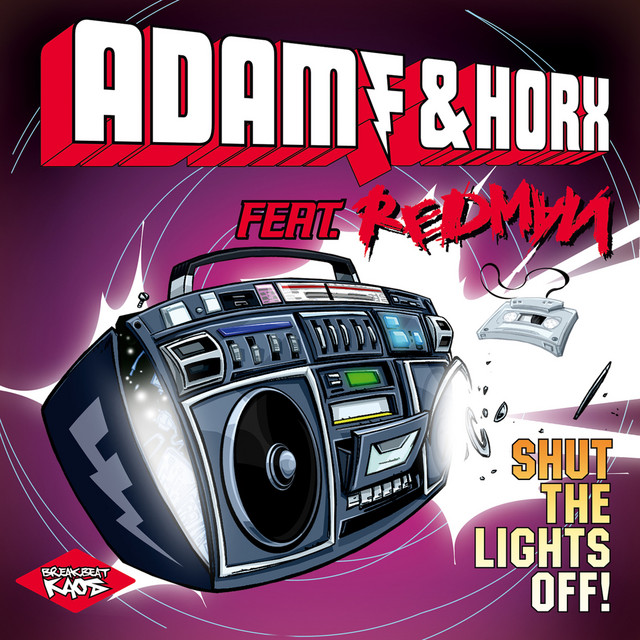
Sub Focus’s self-titled debut, released on RAM Records in 2009, united the club immediacy of ‘Rock It’ with more melodic moments including ‘Last Jungle’. It captured a producer comfortable letting drum & bass rub shoulders with other forms of electronic dance music. The official ‘Rock It’ video was uploaded in 2010; the original single is from 2009.
Alix Perez’s 1984, issued through Shogun Audio in October 2009, was a different proposition. It joined rich rhythmic detail with soul, hip-hop and less obvious combinations of guest artists. Its strength was the feeling of a complete listening world rather than a sequence of club weapons.
dBridge and Instra:mental began their Autonomic podcasts in 2009, drawing connections between D&B, electro, techno, synth music and other influences. Instra:mental’s ‘Watching You’ arrived that year too. The idea was not merely to make drum & bass slower or quieter: it was to hear 170 BPM as an open space.
2009 offers a beautiful historical contrast. Alix Perez's 1984 demonstrated the appeal of detailed, often reflective songwriting within the drum-and-bass album format. Sub Focus's self-titled debut presented a broader, hook-oriented sound that could reach beyond specialist club culture. Neither approach captures the full year; together they show why the genre was difficult to reduce to a single marketing label.
Autonomic: a movement published as a podcast
The Autonomic experiments involving dBridge and Instra:mental are central to 2009. Their podcast series mixed original material with influences from techno, electro, ambient, soul and other traditions. The original archive includes dated posts and tracklists: unlike a retrospective playlist, it records exactly how the selectors chose to frame their influences at the time. An October 2009 episode and the December 2009 tenth layer are especially useful period documents.
The music often operated through negative space. A snare could feel enormous because little surrounded it; a bass tone could evolve without demanding a conventional drop; an unexpected older track in an influence segment could illuminate a connection that a genre chart would miss. The approach made 170 BPM feel flexible rather than fixed.
The role of Exit and Nonplus+
Imprints associated with dBridge and Instra:mental helped give the music an identity beyond one informal circle. The records, artwork and mixes provided a public vocabulary for producers such as ASC, Consequence and Bop, although their individual histories and styles should not be collapsed into one group. The new sound was not entirely unprecedented; its accomplishment was bringing older experimental possibilities into an unusually coherent contemporary conversation.
Fabric recognises a shift
Resident Advisor's December 2009 announcement of a forthcoming FabricLive.50 compilation by dBridge and Instra:mental shows the movement reaching a major London club's publishing platform. The mix itself belongs to 2010, but its announcement and the preceding podcasts are part of 2009. This is exactly why publishing-year precision matters: music histories often merge the idea, announcement, promotional campaign and final release into one date.
Not everything became minimal
At the same moment, dancefloor D&B was thriving, developing bigger performances and a polished production vocabulary. Specialist channels were beginning to make the international audience more visible. A young artist could encounter a track through a label mailing list, a club set, a forum or a video upload. The growing range of entry points would be decisive in the 2010s.
An editorial playlist across opposites
Begin with the patient textures of 1984, move to a Sub Focus anthem, then spend time with an original Autonomic podcast tracklist. This is more than a contrast between "deep" and "mainstream". It shows three different ways to organise musical attention: album listening, communal spectacle and exploratory radio-like sequencing. All three had a role in building the next decade.
In their own words
In a December 2009 Resident Advisor report, Instra:mental summarised one production decision as “we decided to not fill the gaps.” That simple phrase helps explain Autonomic: silence and distance between sounds can be part of the rhythm, rather than spaces the producer must compulsively fill.
Historical dating refers to the original release or scene event, not necessarily to the digital edition or upload displayed in an embedded player. The platform players and recordings remain with their respective rights-holders; DROP THE BASS does not host the audio or video.
Releases of 2009
431 jungle and drum & bass releases from 2009 that live in our catalogue.