By 2005, drum & bass could still be fiercely underground. It could also sound like it was built for enormous speakers and enormous crowds. Two very different albums make the year especially revealing.
Loading…
The latest drum & bass and jungle news, about once a week. Confirm by email, leave in one click.
JUNGLE / DRUM&BASS History · 2001–2010
A new kind of drum & bass album makes its presence felt—while Calibre goes deeper.
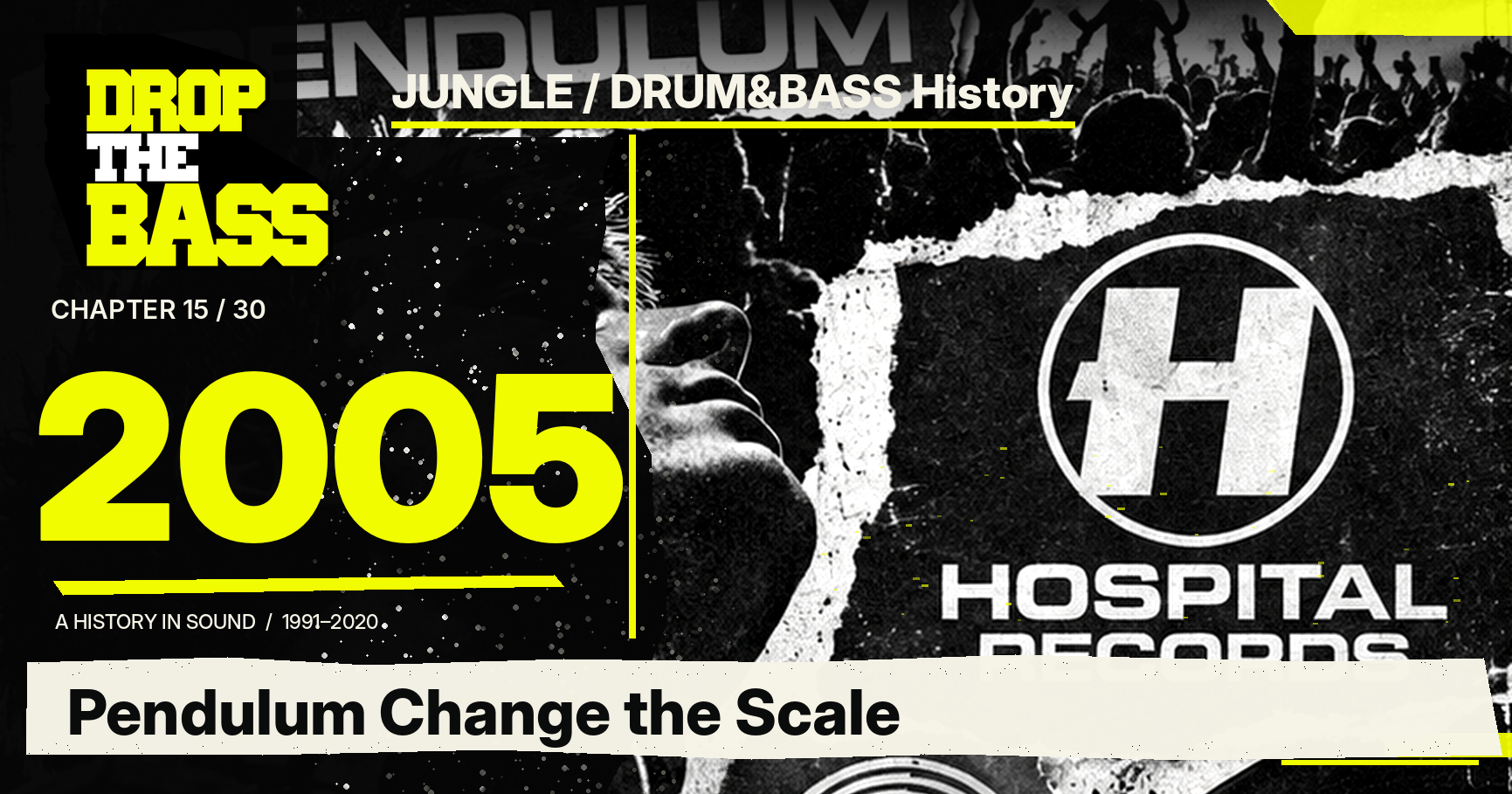
By 2005, drum & bass could still be fiercely underground. It could also sound like it was built for enormous speakers and enormous crowds. Two very different albums make the year especially revealing.
Pendulum released Hold Your Colour on 25 July 2005 through Breakbeat Kaos. ‘Slam’, ‘Tarantula’ and the title track brought a sharply polished, melodic and aggressive sensibility to the club. The Australian trio did not create the idea of a dramatic drum & bass drop; they magnified it for listeners who might never have bought a 12-inch single.
The streaming edition has a revised track listing; original album released in July 2005.
The ‘Slam’ video provides the year with a useful visual document: deliberately comic, recognisably mid-2000s and not simply a modern artwork upload. This Vimeo page is credited to the video creator and identifies the production as dating to 2005.
Creator-posted page for a video made in 2005; Vimeo upload is later.
In October, Calibre’s Second Sun arrived through his Signature imprint. It is a reminder that emotional depth and restraint were not casualties of louder dancefloor music. ‘Drop It Down’, featuring Singing Fats, marries a rolling groove to the human warmth of the voice without requiring spectacle.
Original 2005 album track; this streaming edition is dated 2016.
Pendulum's Hold Your Colour became a landmark because it made drum & bass sound enormous. But its importance lies just as much in the disagreements it created. To some listeners it offered the hooks, energy and identity that helped introduce the genre to a wider audience. To others its massive drops and polished songwriting raised questions about what was being lost from the dubplate-era culture. Both reactions belong in a serious history. A scene that argues about its music is a scene taking its identity seriously.
Pendulum's rise illustrates how international drum & bass had become. The musicians' Australian background mattered, but their records became influential through connections to British labels, clubs, DJs and media. This was a transnational feedback loop, not simply the UK exporting music and the rest of the world imitating it. Producers arriving from outside London brought other melodic and technical expectations, then tested them against established dancefloor culture.
Calibre remained essential to a very different idea of advancement. His sound often located emotion in the chord sequence, bass tone or an understated vocal gesture rather than in an oversized drop. The subtle records were not "easy listening"; they depended on exact choices in drum swing, low-end weight and harmonic space. Put a Calibre piece beside a Pendulum anthem and ask where each stores its tension. Both answers are musical, and both were convincing to their audiences.
A 2005 Guardian interview with Roni Size looked back at the training and curiosity that shaped his career, including early experimentation with electronics in a Bristol community-centre context. Such testimony is valuable because it reminds us that the path from young listener to producer was rarely a straight line into a record company. Access to tools, teachers, equipment and community spaces could have lifelong consequences. This is part of jungle's social history even when the story is told in a mainstream newspaper.
For all the headline focus on albums, ordinary weekly club culture still organised the genre. Friction, Andy C, Fabio, Grooverider, DJ Marky, Storm and many other selectors were shaping what people actually heard. Producers could become famous through records, but they often discovered the real effect of an arrangement when another DJ played it in front of an unfamiliar room.
In the cassette and CD era, a successful mix sequence was also a form of publication. A label compilation could introduce a wider audience to artists whose singles remained specialist; a recorded live set could transmit MC culture and the tempo of a particular city.
The wrong way to tell 2005 is that Pendulum "saved" or "ruined" the genre. Neither extreme withstands examination. The more useful story is of a mature scene facing a newly visible sound while continuing to support established, subtler and harsher traditions. By 2006 independent institutions would make room for still more specialised experiments.
Historical dating refers to the original release or scene event, not necessarily to the digital edition or upload displayed in an embedded player. The platform players and recordings remain with their respective rights-holders; DROP THE BASS does not host the audio or video.
Label
Label