Time-stretched breaks and darker bass make a new future audible.
5 min read 3 players
Illustrative collage by DROP THE BASS — not archival photography.
In 1992 the UK rave sound splintered. One branch chased melody and euphoria; another stretched breaks into strange shapes and made basslines feel heavier, colder and more cinematic. It was not quite jungle as the charts would know it, but you can hear the turn.
The dancefloor changes
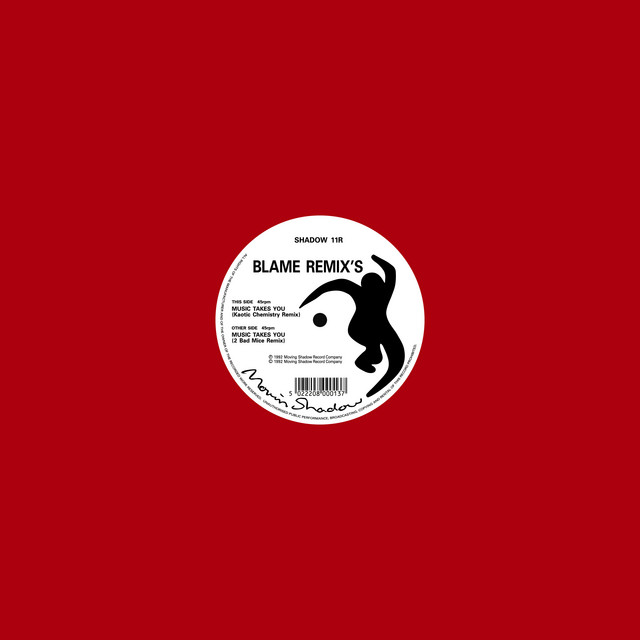
2 Bad Mice’s “Bombscare” on Moving Shadow is still a lesson in how little a track needs to ignite a room. The stabs are simple; the arrangement is all tension and release. Rob Playford and his collaborators were building a label language that jungle and drum & bass would keep revisiting.
Watch · 2 Bad Mice — Bombscare
Moving Shadow audio upload carrying the original 1992 rights information.
The Metalheads/Rufige Kru “Terminator” release, associated with Goldie and Mark Rutherford, pushed time-stretching into an eerie, mechanical signature. Instead of treating a chopped break as decoration, it made the break itself the drama. The original appeared under the Metalheads name on Synthetic Records; later compilations often file it under Goldie or Rufige Kru.
Explore · Metalheads — Terminator (1992)
Hear the rights-holder’s later digital release and compare it with the original 1992 pressing.
Acen’s “Trip to the Moon Pt. 2” shows the hardcore continuum in another direction: accelerated samples, filmic atmosphere and an appetite for the unexpected. These records do not all sound identical. That is the point: in 1992 the vocabulary is expanding faster than the genre labels.
Listen · Acen — Trip to the Moon Pt. 2
1992 hardcore recording; its relationship to jungle is transitional, not a claim that it was already drum & bass.
This is the year to listen for the process, not a finished subgenre: sampler experiments, changing drum patterns and DJs testing radical edits on large systems.
A crossroads, not a clean break
By 1992 the broad umbrella of UK breakbeat hardcore was becoming difficult to describe as one sound. Piano riffs, euphoric vocals, techno stabs, ragga samples and chopped breaks still met on the same dancefloors, but DJs and producers increasingly gravitated towards different combinations. A later genre map draws tidy branches—happy hardcore, darkcore, jungle and eventually drum & bass. In the clubs, those boundaries were messy and provisional. A DJ might follow one storming piano tune with a bass-heavy record that seems, to modern ears, to belong to a different tradition.
The important pressure was not simply speed. Producers were beginning to alter the weight of a tune: long sections with little melody, strange film dialogue, dread-filled chords and breaks cut into irregular fragments. Early-darkcore records shared their atmosphere with the music that became jungle, but darkcore and jungle are not perfectly interchangeable labels. They capture a period in which musical choices were still being negotiated.
Goldie, Reinforced and the sound of the future
One of the year's most revealing signposts is Rufige Kru's Terminator. Its accelerated, metallic break editing made futurism feel threatening rather than glossy. The production is commonly linked to Goldie's emerging role and to the influence of Rob Playford and the Reinforced circle; do not mistake later interviews or remasters for evidence of a 1992 release date. Reinforced, associated with 4hero, was more than a logo on a sleeve: it was a workshop for thinking about structure, studio technique and how much could happen inside the drum pattern itself.
A single track never explains a movement, though. Doc Scott, DJ SS, DJ Hype and the many artists recording under short-lived aliases all added different answers to the question of what hardcore could become. Their records circulated as DJ tools. Much of the musical intelligence was stored in the skill of sequencing them—where a selector chose to bring in the bass, what an MC did over the break, and how long a crowd would tolerate something difficult before it became addictive.
AWOL and the room's authority
AWOL at the Paradise Club in Islington became one of the early dedicated meeting places. Accounts of its launch place it in the autumn of 1992; the precise history of nights and resident lineups is best reconstructed from flyers and recordings rather than assumed from later brand histories. The significance was clear: the emerging sound could now occupy a night instead of surviving as the strange five-minute section of a broader rave. Names frequently associated with AWOL include Randall, Kenny Ken, Micky Finn, Dr S Gachet and Darren Jay.
Tape packs eventually let the club travel. A listener far outside London could learn an event's style, hear an MC's introduction and recognise a new dubplate before buying a ticket. This is one reason old cassette inserts, flyers and pirate recordings matter as historical evidence. They preserve the social shape of music that a vinyl disc cannot.
Two kinds of geography
London provided a critical concentration of labels, radios and dancefloors, but it was not a closed system. Producers in Bristol, the Midlands and elsewhere were pulling at the same rhythmic ideas; the rave circuit linked cities with warehouses and motorway service stations. The idea of one borough inventing jungle is weaker than the picture of multiple local scenes converging around portable records and portable sound systems.
The language "jungle techno" appears in accounts of this transition. It signals overlap, not confusion: producers could carry techno's sound design into breakbeat arrangements while borrowing reggae's physical bass and hip-hop's sampling tactics. Listening for those three strands in a 1992 set is more revealing than asking a producer to choose a genre that might not yet have existed as a stable category.
The archival problem
Later digital catalogues sometimes assign a compilation date or a remaster date to a tune whose dubplate life began years earlier. Early test pressings and white labels could predate a commercial issue, and DJs sometimes played unfinished versions. The correct editorial question is therefore "first documented public circulation, original pressing or reissue?" rather than simply "what date does Spotify show?" Our timeline uses the original-release evidence where it exists and labels uncertainty elsewhere.
Listen for: darker harmonies, abrupt stop-start breaks, ghostly samples and basslines that remain intact while the percussion refuses to repeat itself. These are the 1992 experiments that made 1993 possible.
Dates in this article refer to original scene activity/releases unless otherwise specified. Streaming platforms may show a later remaster, reissue, upload or regional date. The embedded players belong to their respective rights-holders; DROP THE BASS does not host the recordings.
Releases of 1992
22 jungle and drum & bass releases from 1992 that live in our catalogue.