Born in the UK in the early 1990s during an explosion of creative activity, jungle was a free-form approach to broken beats. It became a style that accompanied many producers on their path to professional development, only later settling into the established understanding of the genre we have today. Recently, however, a new wave of talent has emerged, filling every possible dancefloor with its passion for jungle music…
An avalanche of snares, sub-bass smashing into your ribcage, the cries of divas rising from the very depths, elements of funk, shards of techno, echoes of dancehall and attacks of varied rhythms—polyrhythms—are just some of the components of jungle, a drum and bass style currently undergoing a phenomenal revival. Once heard on a club soundsystem, jungle remains the most exhilarating dance music in the UK.
Rather than adhering to the rhythmic structure of contemporary drum and bass, artists such as Djinn, Tim Reaper, Outer Heaven, Mantra, Coco Bryce, Forest Drive West, Kid Lib, Sully, Homemade Weapons and Dead Man’s Chest create beats around powerful 808 bass: a whirlwind of drum hits inspired by everything around them. They are not tempted by the polished mixdowns of modern drum and bass; instead, they are drawn to the rough-edged, original mid-’90s vibe, when producers ranging from Remarc, Dillinja and D’Cruze to Source Direct, Splash and Photek first created this atmosphere and pushed low frequencies and drum parts to their sonic limit.
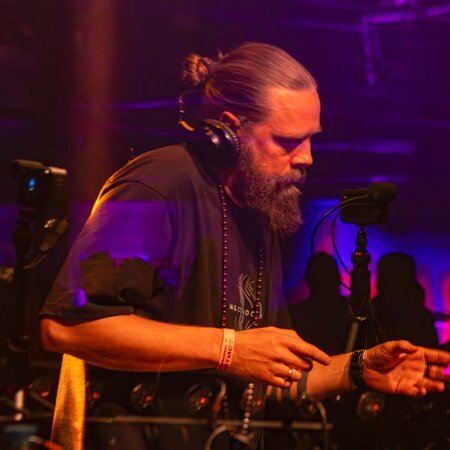
“One of the reasons I started moving in the direction of jungle was the aesthetic,” says Dead Man’s Chest—real name Alex Eveson. “In drum and bass, the sound gradually became polished to an almost sterile state, losing its texture, and that was exactly what I was looking for in my music. The moment came when I realised that the modern standards of mixing in drum and bass were not for me.”
The Bristol producer, formerly known as Eveson, changed his alias so as not to be associated with his own softer liquid sound. “It’s all because of labelling,” he says. “I wanted to do something new and decided to change my stage name, since it would be easier for people to approach the material with a clean slate, without any preconceptions about me.” Releasing on Ingredients as well as his own Western Lore label, Dead Man’s Chest quickly attracted the attention of numerous fans with his jungle tracks.
“High Noon In Cotham” is packed with sped-up or time-stretched drum loops with a metallic sound, vocal samples and icy pads, interrupted by sudden brutal hardcore stabs—synth chords or sounds—reminiscent of Q Project’s classic track “Champion Sound”. Meanwhile, the track “Just 4” is steeped in bittersweet synth nostalgia, a crunchy sound and a four-to-the-floor kick pattern that turns into the sound of a cave being pierced by an amen break. People outside the contemporary drum and bass scene are also taking notice of Alex’s work: for example, he has just remixed “Hunga” by Otik, released on the Dext label.
Dead Man’s Chest is just one of many artists whose rise has been supported by labels deeply committed to this musical concept. While established labels such as Ingredients, Esoteric, Metalheadz, Astrophonica and Samurai Music have continued adding jungle releases to their catalogues for years, a host of younger labels have brought together musicians intent on delivering these thrilling broken rhythms to listeners. Green Bay Wax, Repertoire, AKO Beatz, Stand Firm Hi-Fi, UVB-76 and Rupture LDN—whose parties played a key role in jungle’s revival—devote their discographies to crunchy beats made mainly by new artists.
“It’s cool to see so many quality labels releasing jungle and crowds of new producers getting into it,” says Mantra (Indi Khera) of Rupture LDN. “It seems that once you catch the vibe, it’s impossible to shake it off, and it just starts spreading like a virus!” Repertoire, run by Ricky Law, who is also behind the drumtrip.co.uk website, releases music by such practitioners as Tim Reaper, Overlook and Artilect, among many others. Artilect’s track “Lost”, from the “Something Else EP”, is shrouded in dark cyber drones and eerie vocal effects, with methodically chopped drum loops, while “Evolution” revolves around shuffling kicks and techno pads, forming an invigorating and genuinely new rhythm.
Unlike many other styles, jungle places the emphasis on constantly changing rhythms created to delight and stimulate dancers’ minds. Creative drum loops are highly valued as long as they retain their original swing, and this is partly why Law came to love the sound. Although he likes other styles too, he believes jungle’s return is driven by producers growing tired of mechanical rhythms and wanting to regain their freedom by experimenting with more organic textures. “Some of us got bored with identical drum samples; it feels as though some tracks are written ‘by tracing paper’,” he says. “I like two-step if it has groove. Drum and bass is about the drum and the bass, isn’t it? The answer is in the name—so get on with your drums, people!”
Law clearly feels, and is immensely happy about, jungle’s growing popularity. “In 2009, when I launched Repertoire, this sound definitely wasn’t so widespread,” says Law. “It seems that its popularisation was caused by a whole series of seemingly insignificant factors, such as vinyl unexpectedly becoming desirable again across all musical styles, the success of Rupture parties at Corsica Studios, and producers from other styles—from Special Request to Raime—using jungle in their tracks. I think jungle is back in favour.”
No scene can successfully exist without a physical manifestation: club nights where members of the scene can meet, exchange ideas and hear their sound reflected among a crowd of like-minded ravers. Manchester’s Formless, Bristol’s Jungle Syndicate and London’s AKO are flying the flag, but Rupture, held mainly at Corsica Studios in Elephant & Castle, London, became the centre of attraction that shaped jungle’s resurrection. Run by Mantra and Double O (David Henry), the club night gradually became a focal point for the movement.
“Rupture parties have been running for around 12 years and things are going better than ever; you can feel that a real community exists,” says Mantra. “Going to Rupture is like going to church,” adds Law. The club plays both old-school and highly contemporary beats. Tim Reaper—real name Ed Alloh—is considered to have played a key role in jungle’s rising popularity. “On the night of a Rupture party, people came from all over London to hear drum and bass and old-school,” he says. “It was also great that people who came to hear one particular style of music were introduced to other directions as well, since both new and old school were heard on both dancefloors at Corsica Studios.”
Tim Reaper embodies the contemporary jungle movement. His professionalism and high level of detail, down to microscopic precision in his treatment of the beat, demonstrate respect for jungle’s heritage, though heard from a considerable distance from the period of its heyday. “I discovered jungle while listening to drum and bass and stumbling across a fake DJ Hype page on MySpace, where tracks such as Dead Dred’s “Dred Bass” and DJ Zinc’s “Super Sharp Shooter” had been uploaded,” he says. “I didn’t know it was called jungle or that it was a different style of drum and bass from what I had been listening to, but I connected with those tracks more than with anything I had heard before.”
“With the help of the friendly guys on the Drum & Bass Arena forum, some YouTube channels, Discogs and Rolldabeats, which uploaded hundreds of old jungle and hardcore tracks, I gained an understanding of and information about the artists, labels and DJs who had shaped the scene at the time.”
Drawing on sounds from every era and across the spectrum, and using new variations, he creates unexpected and fresh combinations. While the track “Give Me More” is a leap through time between expansive pads and heavy Reese basslines—sustained, distorted bass samples—the new track “Welcome To Globex Corp” bursts in relentlessly as fierce 4x4 jungle techno: a genre that developed out of early-’90s hardcore music and gradually transformed into early forms of jungle.
“Only after I realised that I had listened to every track from 1994–96 did I decide to examine the earlier material carefully,” says Alloh. “I realised how foolish I had been to ignore that whole period. Labels such as Sound Entity, Liquid Wax, Formation, Dark Horse, Basement and others released dark rollers or pounding broken-beat tracks. Influenced by techno, I began incorporating these tracks into my DJ sets, and also wanted to write my own so I could play them mixed in with the old ones.”
“Until recently there were very few labels releasing this kind of sound,” he continues. “That was until I met Simon, who ran 7th Storey Project and was apparently more obsessed than anyone else with the tracks I was making in this direction. After two of my tracks came out on his label, he offered me an EP, and I decided to bring in Dwarde, since he was on the same wavelength as me regarding tracks released in 1992–93 and the years that followed.
The blend of jungle and techno that had recently absorbed Tim Reaper also excited others. Próximo is a London party at the Victoria pub in Dalston, run by Luke Hansbury. The event’s aim is to bring together a mixed crowd, putting techno and jungle DJs under one roof and also reaching people who have not yet made up their minds. At past parties, Dead Man’s Chest shared the dancefloor with the multigenre artist Minor Science from the Whities label, while Forest Drive West—who makes electro and techno, as well as new-school jungle for Rupture LDN—set the mood at their launch alongside breakbeat Satan, West Norwood Cassette Library.
“I wanted to bring something new and fresh to London parties,” says Hansbury. “I have always been a fan of events where you can hear a broad range of styles on one dancefloor. It allows people to discover genres they may not have heard before. At our last party, proper junglists listened to Basic Channel and acid house alongside true techno fans who were losing it to amens; it was great to watch devotees of different scenes merge into one.”
One reason jungle has started gaining momentum again is people’s openness to those who have decided to pour their creative energy into this music. DJ and producer Sully (real name Jack Stevens) from Norwich, UK, has become one of the most prominent artists in British bass music over the past decade. He has released reworked dubstep and garage on labels including Keysound, Astrophonica and Black Acre. Recently he has experimented with jungle, adding elements not typical of the genre. On “X Plus Y”, from his album “Escape” on Keysound, fragments of percussion become an integral part of the harmony, sliding up and down and complementing melodic sounds and dub effects.
Alongside the original beat, Sully uses jungle’s classic atmosphere and character and transforms them in ways made possible only by modern technology. In the same way, “Vanta”, from the same record, is woven from finely chopped beats pulsing around an ominous synthesiser; the sound feels more closely associated with experimental sound art. “I work a lot with synthesisers and prefer to draw a mood rather than simply write in the bass and drum hits,” says Sully. “That mostly characterises my approach; drums are also an instrument that creates melody for me. I use the snare to create melodies. I don’t think others do that. I alter the timbre of drum hits, distorting their sound so that they work like a melody, really detailing every hit so that you can hear more than just a drum loop.”
When Sully began writing jungle, he was unsure how his unconventional approach would be received. “I suppose my early releases sounded unusual and I expected people to reject them, but nothing like that happened. If you do something sincerely, rather than symbolically repeating overused techniques, people will definitely appreciate it.”
“There has been a reassessment of the incredible music of the ’90s, an understanding of how far ahead of its time it was and how much power it could contain. A whole range of DJs and producers have felt that energy, technically reflecting it in their tracks and taking it to the next level,” says Luke Hansbury.
Less familiar and more abstract forms of jungle are now beginning to spread. Dead Man’s Chest comments on material submitted to him for possible release on Western Lore: “I received some music from Response, who started sending me these slowed-down experimental pieces, 10–15-minute tracks. Another artist whose sound design deserves mention is Threshold; he has achieved real mastery in this field. He has taken the art of writing music to a scientific level.”
Today’s jungle scene has centred a genre fusion around artists such as Fracture and Om Unit, who have mixed footwork into their broken-beat tracks, or Pessimist, who envelops his musical chimeras in a bleak Berlin techno aura. Making jungle music is becoming accessible and attractive to producers from other musical spheres. The main requirement is that their jungle should remain distinctive. “There are no rules,” says Double O. “You can use any genres you want. If you are confident in what you are doing, you can make it sound like jungle.”
“Producers draw inspiration from all sorts of things,” adds Mantra. “Sully’s album has a lot of grime/140 BPM tracks, Forest Drive West makes amazing techno with Livity Sound, and you can hear the influence of that sound in the drum and bass he is making now. That is what keeps jungle afloat—producers can draw inspiration from anywhere, wherever they find it. That is what makes their sound unique.”
Rings Around Saturn (from Melbourne, Australia) and DJ Seinfeld (originally from Sweden but based in Barcelona, Spain) make jungle under other stage names, giving the impression that this new jungle movement has a global reach. One of its most prominent artists is Coco Bryce, whose energetic and authentic sound comes from an unexpected place: Breda in the Netherlands, more commonly associated with the chart-topping work of trance DJs. He draws inspiration from the DIY lo-fi movement, adding his own exuberance. Meanwhile, Enjoy, whose killer release “Just A Vibe” came out on AKO Beatz last year, is based in Udine, Italy. The online jungle community has helped shape the revived movement; in our age of opportunity and connectivity, geography is no longer a problem. “As far as promotion and maintaining professional connections are concerned,” says Double O, “it is easy to get in touch with everyone, so we feed each other and maintain a high level of inspiration.”
The Facebook group “Long Live Beautifully Crafted Jungle” is just one of the resources acting as a custodian of the original sound and providing a place where younger fans can discover classic and new material. “It reminds people who was there at the beginning and that listeners still respect and take an interest in the old-school style, while also opening a window onto the older sound for those who were not there at the time,” says Tim Reaper.
For Manchester DJ/producer Djinn (Hannah Garvey), one of the organisers of Formless, who has released a series of ruthless jungle tracks on Subdepth and Foundation X, this music has become deeper and more absorbing than what she played before. “At first I played breaks, but something pulled me towards jungle. I realised it operates on another level. It makes you think and evokes emotions. I am crazy about the amen break. It sounds powerful. All this 808 bass jungle sound with elements resembling cinematic sounds, influenced by Photek and Source Direct—that sci-fi soundtrack vibe.”
Her tracks, such as “Dark Reference”, combine an ominous dubwise mood with pounding drum loops, while ghostly samples from jungle’s past, such as sounds from “Mentasm”, lurk in the darkness.
When her Formless parties began in 2015, not much else was happening in Manchester’s jungle sphere, but she noticed the situation beginning to change. “That is why this party emerged; there was not much variety in the city,” she says. “There was a lot of dubstep, which I liked, but not as much as drum and bass. I think many people felt the same, because it seemed they really got into it and understood that this was what our area needed.”
The popularity of any established musical genre tends to wax and wane, and now that young listeners are ready to discover ’90s music—thanks to YouTube, Discogs and Spotify—and as older music becomes all-consuming and reveals the treasures of the recent past, it is jungle’s turn.”“I suppose there has been a reassessment of the incredible music of the ’90s, an understanding of how far ahead of its time it was and how much power it could contain,” says Luke Hansbury. “A whole range of DJs and producers have felt that energy, technically reflecting it in their tracks and taking it to the next level.”
Everyone DJ Mag spoke to for this article agrees that jungle’s complex rhythmic component and the enormous compositional possibilities it offers make it an extremely attractive genre. Music based on broken rhythm in all its forms is becoming more promising than ever for those tired of the straight four-on-the-floor beat of house and techno, while jungle represents the most expressive manifestation of the broken beat.
“For me personally, it was the energy and raw, dirty quality of jungle’s sound that no other genre could provide,” says Tim Reaper. “The layering and chopping of drum loops, dense 808 bass hits and Reese basslines, together with the chaotic sampling of absolutely any other genre, became the perfect formula—a real volatile mixture of sounds and styles that formed an amazing and unique combination.”
Dead Man’s Chest first encountered jungle by listening to mixes on cassettes, and their forcefulness has stayed with him ever since. “The way I listened to those mixes was not about one track; I didn’t know where one track began or ended. It was one big collage of different sounds mixed together,” he says. “The sound did not come from the producer’s desk but from turntables, from sets recorded at performances and then copied onto the cassette I received—that was the route this music travelled. It affected my perception of music.”
He believes that jungle’s musical sense of space and economy of sound leave much more room for experimentation than any other subgenre of drum and bass. “In drum and bass, everyone started layering too much on top of one another, creating an unnatural-sounding track. In jungle, less emphasis is placed on that and the drums sound more natural. More space is left for the bass and the music. Personally, a more measured tempo leaves more space around the drums, pushing them into the background so they do not hit you right in the face. Musically, it frees up a lot of space, and I felt that arranging and experimenting with music was much easier with this setup.”
Jungle was originally created in multicultural London. It was a product of African-American culture’s sound in the UK, influenced by Jamaican styles such as dub, roots, reggae and dancehall, but also by American broken beats, hip-hop and sampling; early European rave, particularly new beat from Belgium, also played a part, as did the UK acid-house scene, which later transformed into hardcore. Created and performed by people of different races and cultures, jungle quickly spread from London to Essex, Hertfordshire, Bristol, Manchester and beyond, rapidly changing through ragga jungle—with strong dancehall influence, thanks to MCs—as well as through techno, ambient and jazz.
The track “Pulp Fiction”, written by Alex Reece in 1995 and regarded as a classic recording, nevertheless came in for criticism from some quarters for shifting the genre’s beat structure and, at least temporarily, cancelling out jungle’s polyrhythmic sound. The drum and bass beat began to sound like a clear two-step. Nevertheless, an increasingly free jungle groove continued to appear, for example in tracks such as Danny Byrd’s “Shock Out”, Breakage’s “Clarendon” and High Contrast’s “Ghost Of Jungle Past”—just a few of the jungle compositions released during the transitional years before the style’s total revival. Significantly, jungle has returned now, at a time when conflict between musical factions is far less widespread than it once was. Listeners can choose and mix music from any styles because everything is on the internet. It is an absolute mix of genres that expands the boundaries—a musical Esperanto, so to speak.
“The distinctive feature of writing contemporary old-school-sounding music today is that, instead of producers thinking, ‘I only want to make ragga material’ or ‘I want to write atmospheric/deep beats’, everyone takes a little from each style, which means there is plenty to experiment with,” says Tim Reaper. “No one is focused exclusively on one direction; people have seen the space created back then and are now trying their hand at a bit of everything, which, in my opinion, makes what is happening more exciting.”
Although jungle is sometimes seasoned with samples from funk, reggae and euphoric rave, it remains dark. In contrast to the more joyful mood of drum and bass styles such as liquid or, to some extent, jump-up, it is a dark sound that appears in hypnotic and sometimes frightening forms. Dead Man’s Chest believes this is understandable, given that America is ruled by a fanatical businessman and the world is marked by political uncertainty passed down by duplicitous governments through the media. “The state the world is in now, and our perception of the situation, is incredibly chaotic,” he says.
“In the 2000s there was a lot of funk in drum and bass. There was a lot of positivity and an upbeat mood in the music. Over the last few years, the state of the world has become more obscure, so jungle is the ideal soundtrack to all of this, I think. I would be writing jungle anyway. It is specifically about how we perceive the present day, and it feels extremely close.”
Jungle is definitely moving back to the forefront, and this is only the beginning. Dead Man’s Chest is preparing a new compilation for his Western Lore label with like-minded musicians. Rupture LDN is releasing its own compilation with tracks from Seba, Nucleus, Sully, Dead Man’s Chest, Forest Drive West and Digital; Sully is launching his own label and preparing material for Foxy Jangle and a remix of 2 Bad Mice; Djinn is releasing a new collaboration with Mantra on AKO Beatz; Repertoire is preparing releases from Ricky Force, Eusebeia and Acid Lab; and Tim Reaper has material signed to a large number of labels.
“Is it a movement? Definitely yes. We have all united and are working together to push forward the sound we love,” says Mantra.
Originally published by DJ Mag as “The Return Of Jungle”. Translated from the Russian translation by Anna Metelitsa (Sunnet).
Dead Man’s Chest in Russia, April 2018
Steppin’ Session: Dead Man’s Chest (UK) + Dissident & Cyberworm (live). 14 April 2018 in Moscow at Pravda and 15 April 2018 in Saint Petersburg at Mosaique.